Buy it. Wear it. Flip it.
Discovering vintage, used, and one-of-a-kind listings on StockX.
My RoleDirector, Product Design
UX Strategy & buyer discovery designTeam2 PMs · 3 Designers · 10+ Engineers
Partnered with research & productDiscovery through launchQ4 2025
Scope01 Context & ChallengeExpanding the core business model
Since StockX was founded in 2016, all products bought and sold were in new and unworn condition with original packaging and tags. In this model, independent sellers listed their items as Asks on a centralized product page. Buyers could only purchase the item from the seller with the lowest price. Once the item was sold, the seller shipped it to one of our verification centers where StockX verified that the condition of the item was perfect before shipping it to the buyer. StockX quickly achieved product market fit with this model, however after a decade, changes in the market began to cause strain and slow growth.
Key Problems:
Speed
Two shipping legs is slow with an average time to serve close to 2 weeks.
Pricing & Fees
Shipping and human verification of every item are expensive, and the costs are passed on to buyers and sellers in marketplace fees.
Limited Market
Once a buyer had worn or used the item, it could no longer be sold to another buyer.
expand while preserving the trust and verification that buyers expect from StockX.
How might we...User Experience Goals
Model Expansion
Create a listings-based model where sellers can create one-of-a-kind listings and ship them directly to buyers.
Seller Experience
A quick and easy process for creating new listings that makes the platform more accessible to new types of sellers
Trust & Safety
Create experience where buyers can trust they are getting the products they want and are protected from scammers
Shopping Experience
Preserve StockX’s brand integrity and differentiate it from eBay’s cluttered, inconsistent experience.
Catalog Expansion
Supporting a wider variety of products and conditions
Distinct Shopping Modes
Differentiate this new, listings-based model from the traditional StockX model so that buyers understand what they are paying for
02 Exploration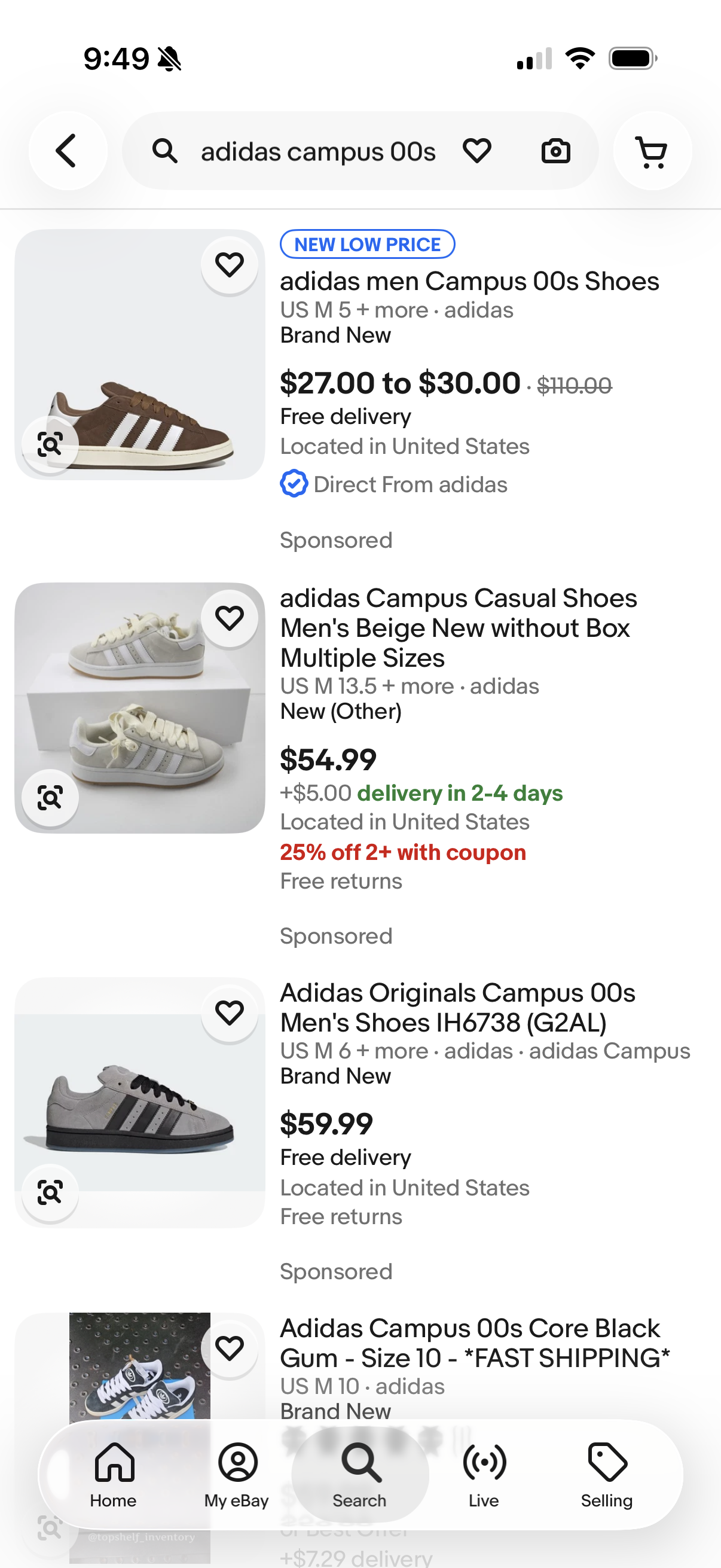
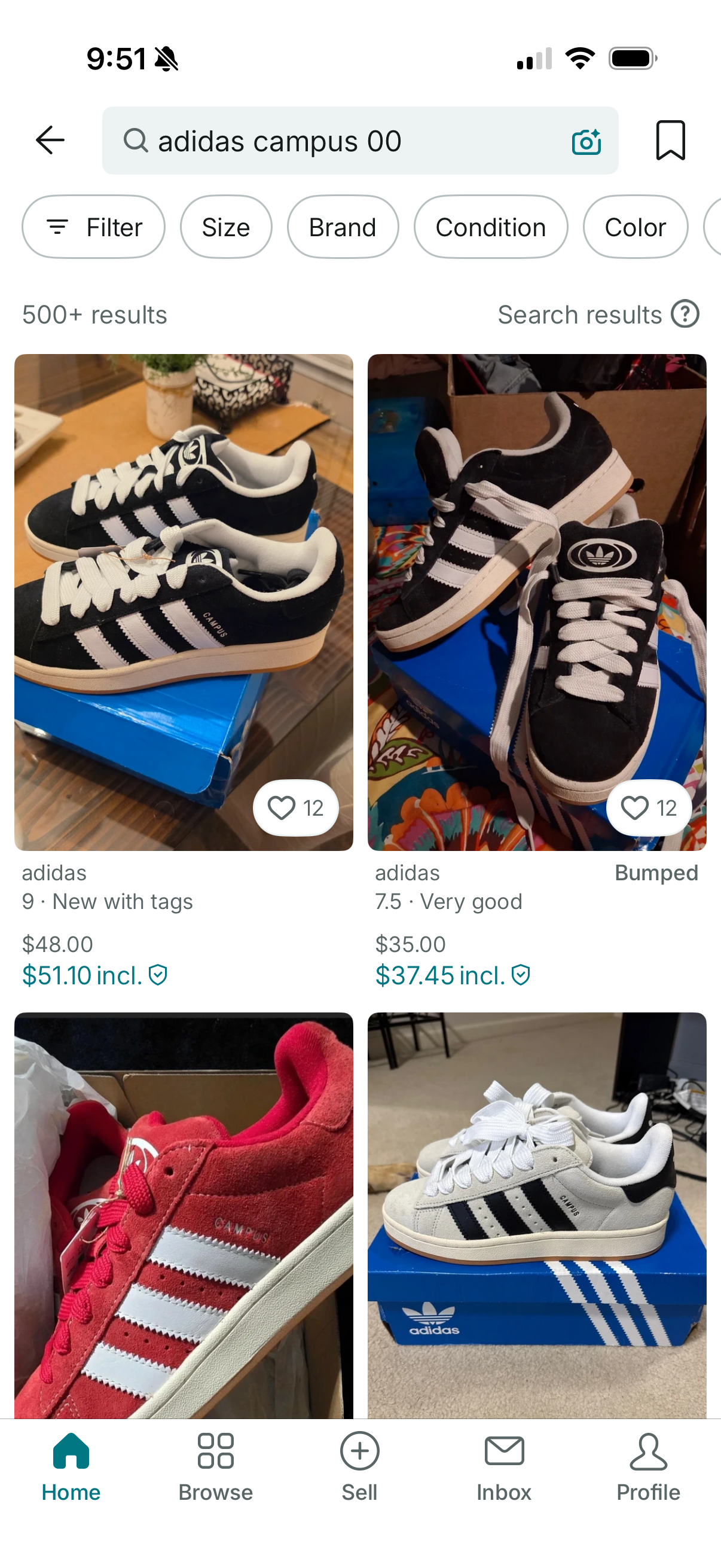
The competitive landscape
A known risk with expanding into the listings space was the number of strong incumbent apps. However, when we examined the shopping experiences on existing listings marketplaces, there wasn’t much variation in how listings are discovered. Both long-established apps like eBay and relative newcomers like Vinted present search results with one product tile for every listing result. Shoppers need to scroll through the list and click into individual product pages in order to compare prices and photos. This creates a lot of tedious back and forth in the browsing process.
Early research interviews confirmed that this was a key pain point on existing apps.
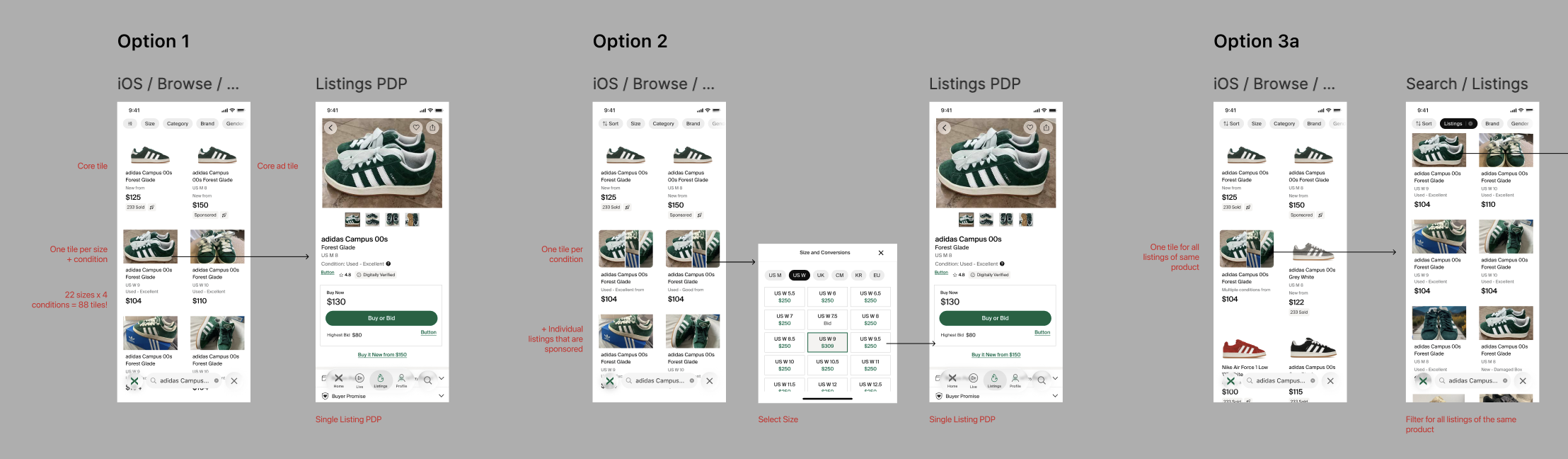
The Buying Funnel
We explored a lot of different paths to get shoppers through the buying funnel. The traditional approach was the shortest path, however, we wanted more opportunities to provide actionable data and make results easier to compare. We also wanted shoppers to be able to compare prices with our existing, new and verified catalog.
03 SolutionUnified browsing experience
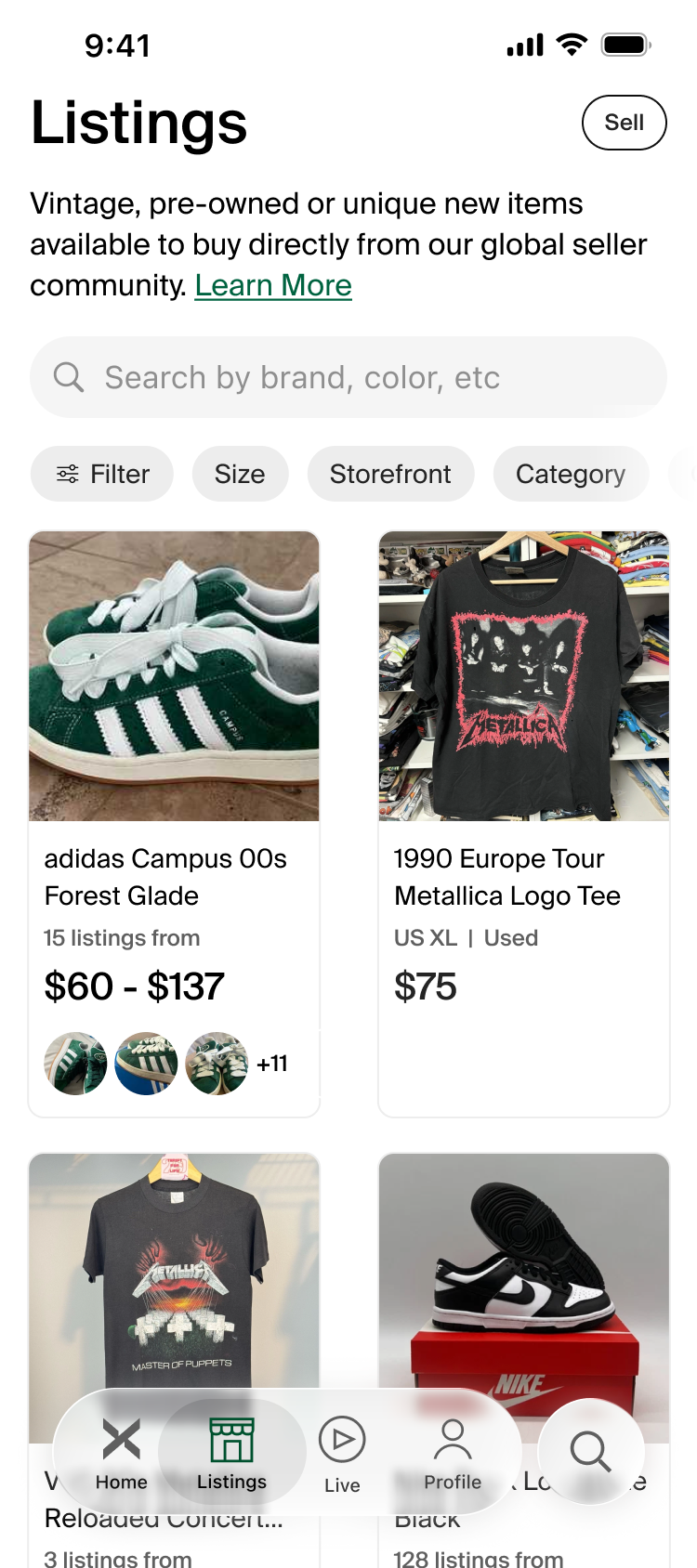
One tile per product
A less cluttered discovery experience where listings of the same product are grouped together into a single product tile.
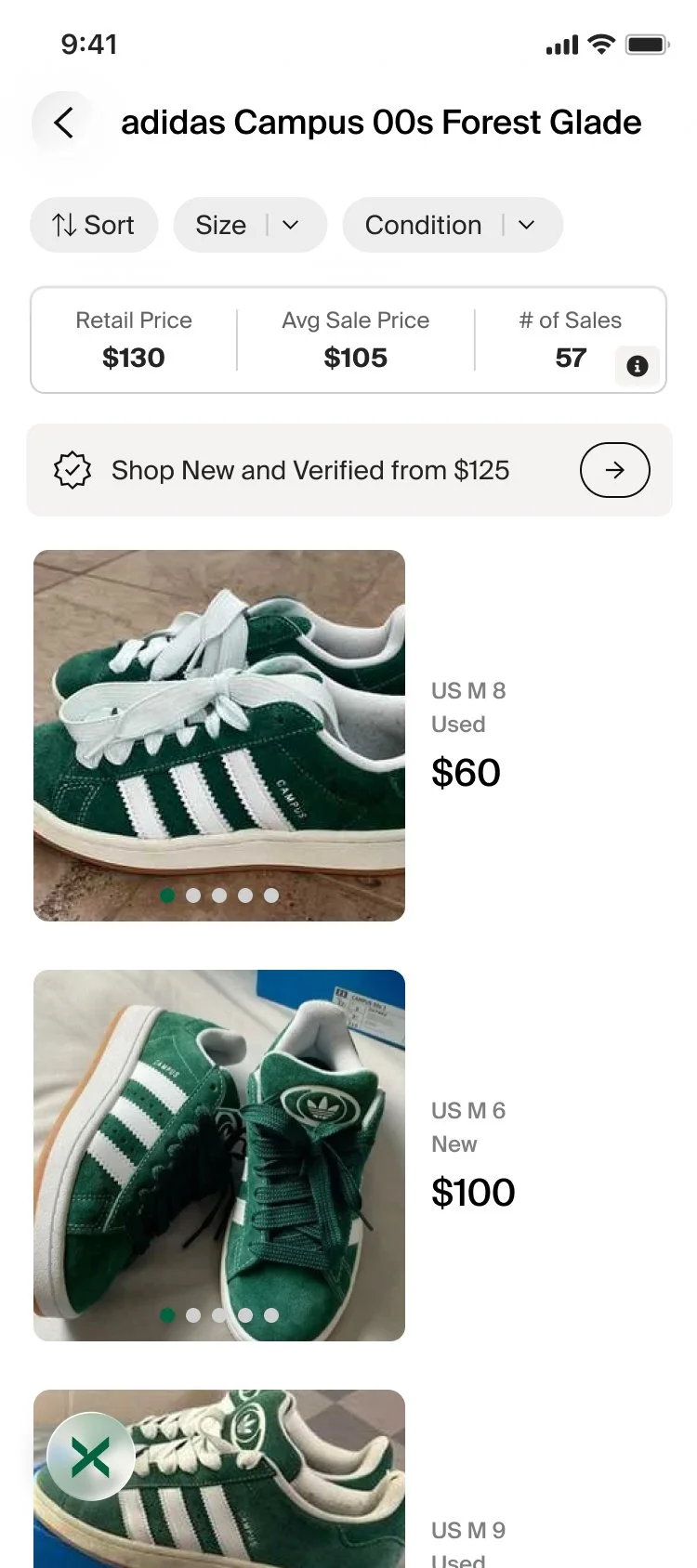
Product group page
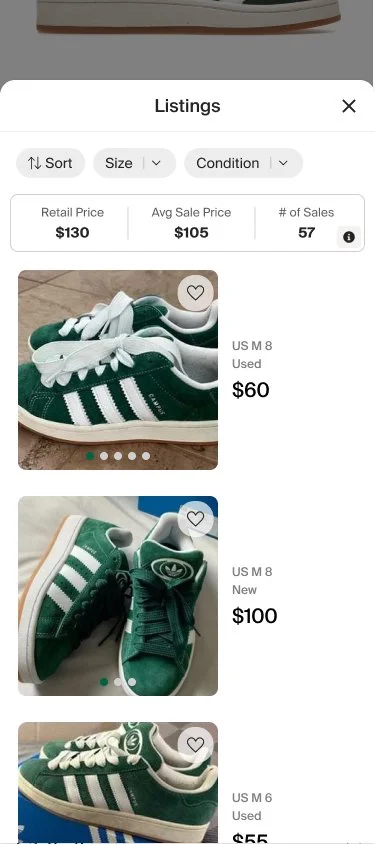
An additional page in the browsing experience where shoppers can easily compare photos and prices for all listings of the same product.
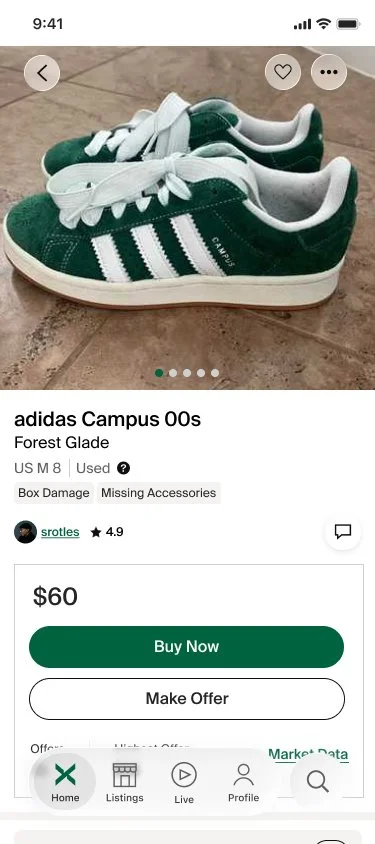
Product detail page
Each listing has a dedicated product page where buyers can view details for that listing.
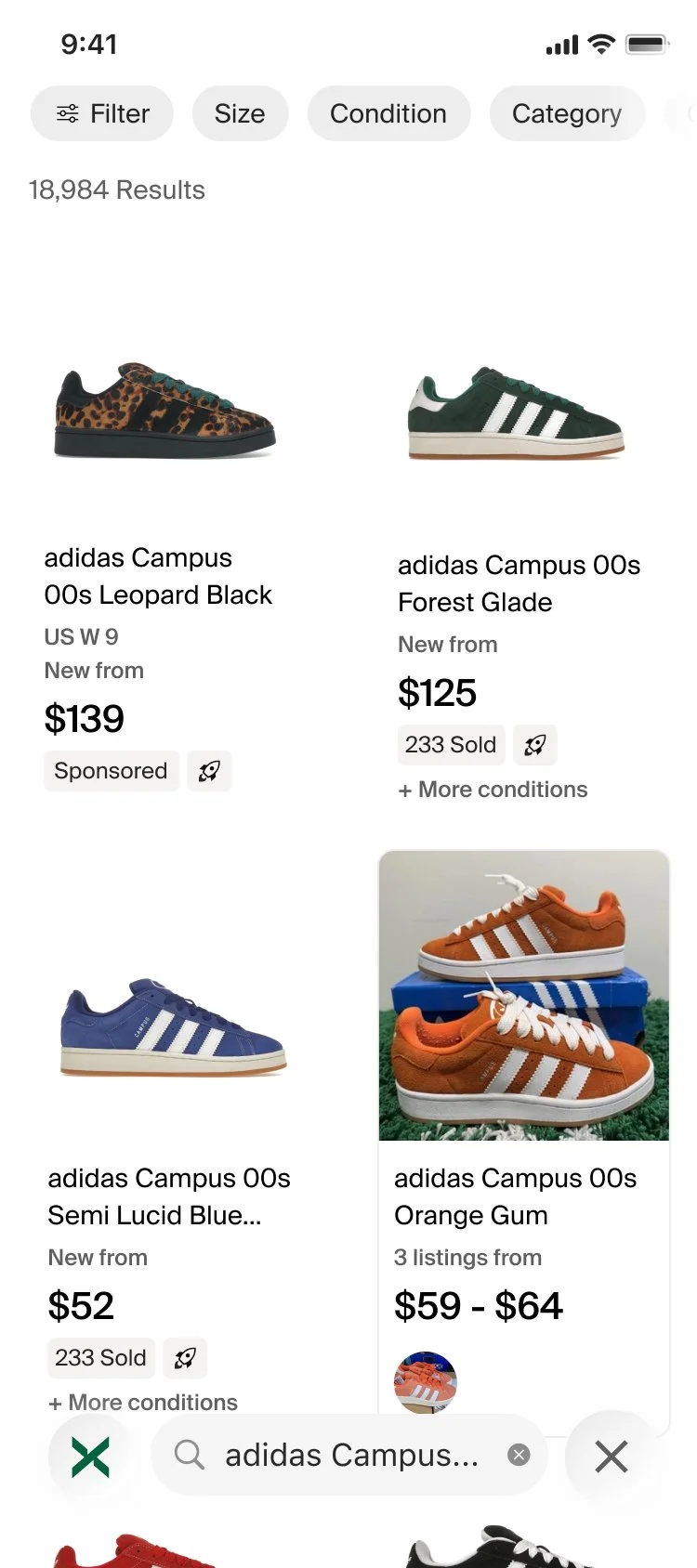
Search Results
The main app search results page links of the new and verified product tile first rather than showing multiple tiles for different product conditions. Listings product tiles can also appear in the results set if they are the most relevant. Additionally, we added filters for product condition.
Product page links
We added a new section to the product page that links to the product group page and allows shoppers on the new condition product page to easily find used versions of the same product.
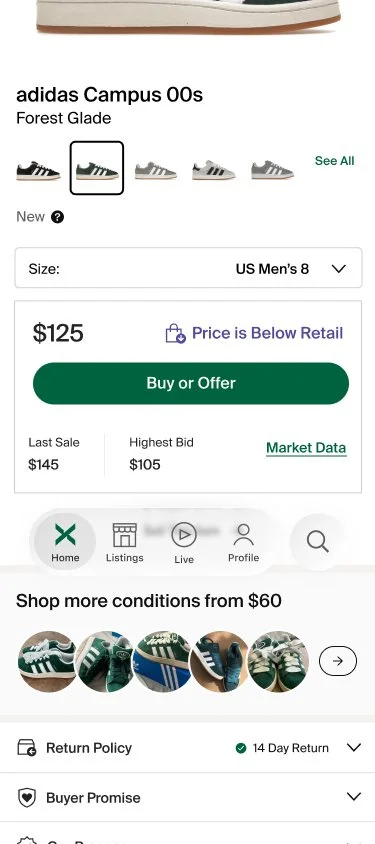
User Testing Results
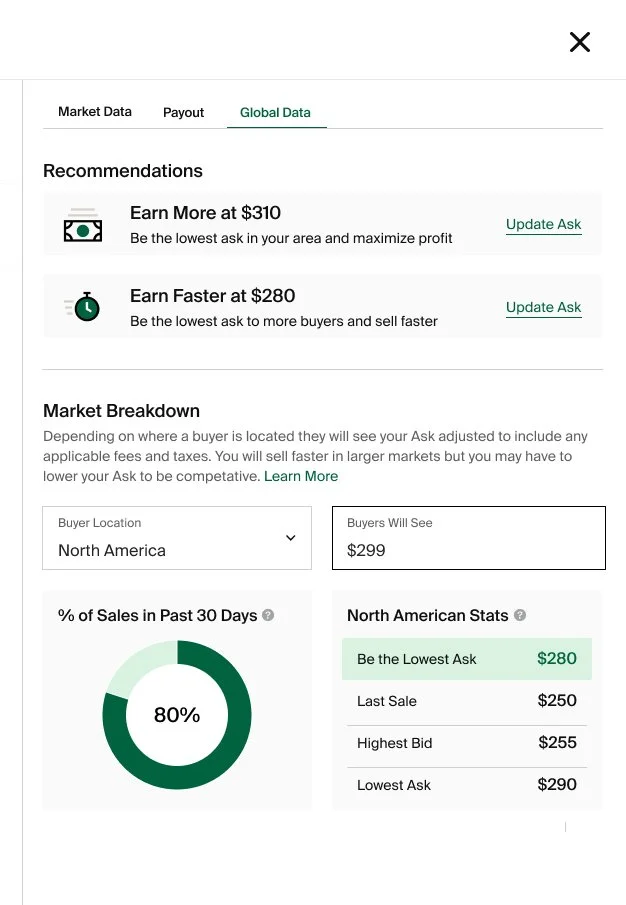
Both designs were shown to international power sellers who had previously experienced difficulty pricing their items. Participants completed a series of UX tasks and then asked if the designs mitigated their concerns around pricing.
Both designs successfully solved the key issues that international sellers had been facing regarding how to price their Asks for global buyers
All participants preferred the version 1 design over the version 2 design due to the Pie design’s level of detail and intuitiveness
The Earn More and Earn Faster pricing recommendations were not initially intuitive, but were appreciated when participants learned what these metrics represented
The feedback gave us a lot of actionable feedback that was incorporated into a version 3 design that highlighted the recommendations and explained them more clearly.
03 SolutionReality Check
Although our sellers really liked the level of detail provided by the proposed designs, the business was not comfortable disclosing that level of operational detail. The first version of the panel that was deployed, only contains the pricing recommendations. However, it has still been very successful with 60% of users viewing the recommendations.
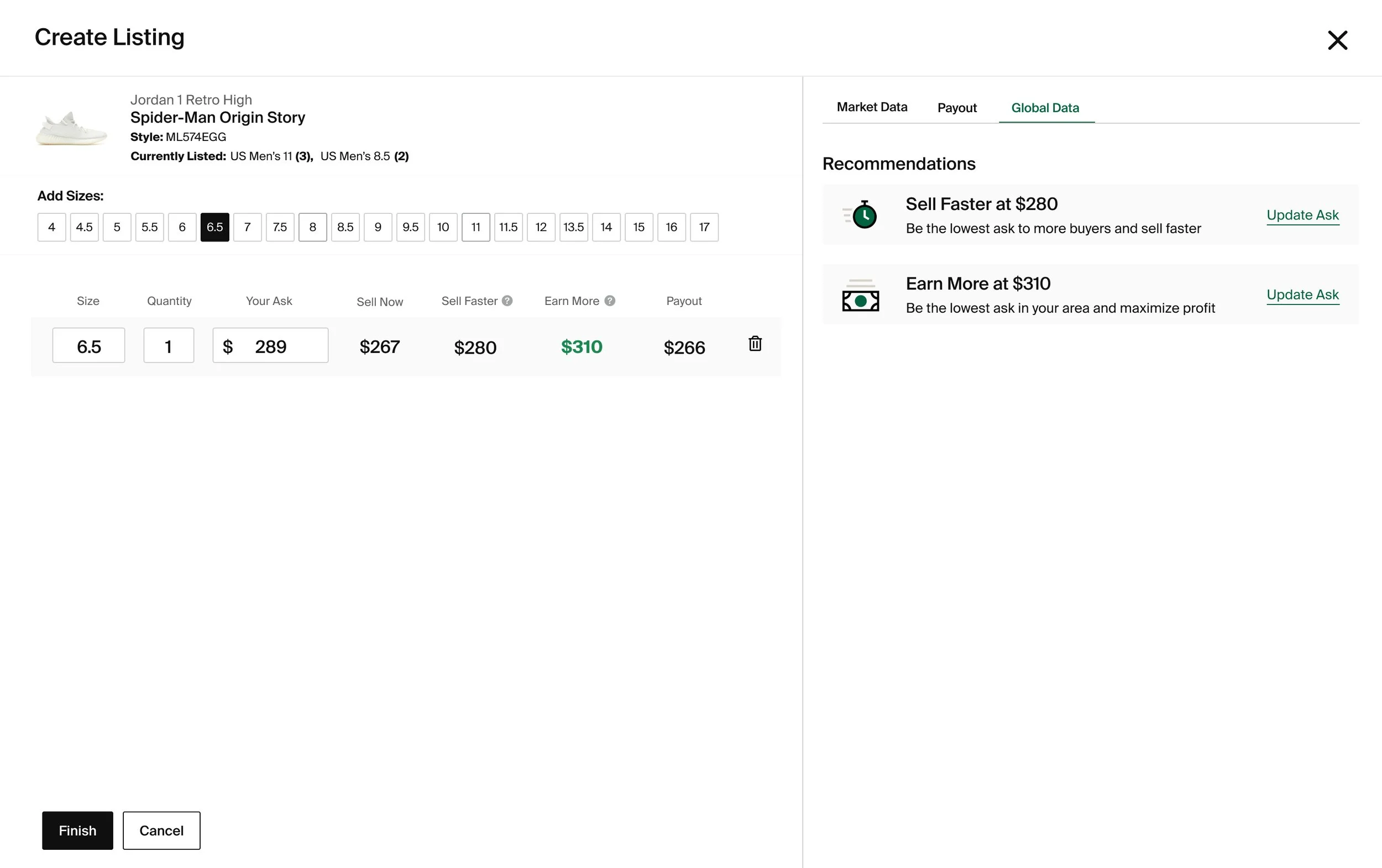
Simple but useful
Despite it’s simplicity, the first version was very successful with 60% of users viewing the recommendations. Additionally, the qualitative feedback from sellers was extremely positive.
“This is a game changer for me, I don’t have time to manually check the lowest asks with my US account every time - all I want to do is clearout inventory and be the lowest ask in the country, now I can.”
Power seller“Lastly, the new addition on the application that shows us how much of an asking price we should place to get our product sold faster is a great addition and is highly efficient for us to use.”
Power Seller05 ReflectionDesign less, listen more
This project has evolved over multiple years, multiple continents, and multiple US trade policies. Ultimately, we have been successful by listening to our sellers. We are privileged to have sellers that are generous with their time and feedback. By wading into the complexities and listening to their day-to-day challenges, we arrived at a solution that was a lot simpler than I envisioned in 2021.
A simple experience that users can understand quickly is a lot more likely to be used.
What I learned
Although we have made huge improvements, our current is still anchored on only two recommendations. In my dream state, sellers would be able to tell us their goals, for example how quickly they want to sell and we could adjust their price automatically to meet that goal.
What I would change
Today every seller-facing project considers pricing guidance. We now have pricing recommendations for multiple marketplaces including used items.
What came next